
Bubble Hash
Price range: $100.00 through $1,400.00
Bubble Hash is a solventless cannabis concentrate made by separating resin-rich trichomes from plant material using ice, cold water, agitation, and filtration. Also known as ice-water hash, it can vary considerably in color, texture, refinement, and melt characteristics. This guide explains what Bubble Hash is, how trichome separation works, what micron grades mean, how to evaluate quality, and how storage and laboratory testing can affect the buying decision.
Bubble Hash: Complete Guide to Quality, Texture, Color, Micron Grades and Other Hash Types
Bubble Hash is a well-known form of solventless cannabis concentrate made by separating resin-rich trichomes from cannabis plant material. The traditional process relies on ice, cold water, agitation, and filtration rather than conventional chemical extraction solvents.
For people searching what is Bubble Hash, the most important thing to understand is that the name describes a production style, not a guaranteed level of potency or purity. Bubble Hash can vary widely in color, texture, aroma, consistency, micron grade, and melt behavior.
These differences come from several factors, including the quality of the starting material, trichome maturity, processing technique, filtration, drying, handling, and storage.
Terms such as ice water hash, full melt, micron grade, and solventless hash can help describe a product, but none of them should be treated as automatic proof of premium quality.
This guide explains how Bubble Hash works, what its appearance and texture can tell you, how micron grades are used, what full melt means, and how Bubble Hash compares with other forms of hash and cannabis concentrates.
What Is Bubble Hash?
Bubble Hash is a concentrated cannabis product made primarily from separated trichomes.
Trichomes are tiny resin-producing structures found on cannabis flowers and nearby plant material. They contain many of the cannabinoids, terpenes, and aromatic compounds associated with cannabis.
During Bubble Hash production, trichomes are physically separated from plant material using cold temperatures and filtration. The resulting material contains a higher concentration of resin than ordinary cannabis flower.
Bubble Hash is often called ice water hash because ice and water play an important role in the separation process.
However, not every product labeled Bubble Hash is identical. One batch may contain a high proportion of separated resin heads, while another may contain more plant material or a broader mix of particle sizes.
The product name alone cannot confirm potency, micron size, full-melt quality, or laboratory purity.
Why Is It Called Bubble Hash?
The name Bubble Hash is commonly linked to the way resin-rich hash may react when exposed to heat.
Some refined hash can bubble, soften, or melt as it heats. This behavior is associated with resin content and refinement, but it should not be treated as a scientific measurement of potency.
A product that bubbles strongly is not automatically more potent than one that does not.
Similarly, melt behavior cannot determine cannabinoid percentages, terpene content, pesticide levels, heavy metals, or microbial safety.
Bubble Hash Product Specifications
| Specification | Details |
|---|---|
| Product Name | Bubble Hash |
| Product Category | Cannabis hash / concentrate |
| Type | Ice water hash |
| Processing Style | Solventless separation |
| Primary Material | Cannabis trichomes |
| Separation Method | Ice, water, agitation and filtration |
| Texture | Sandy, crumbly, soft, tacky or cohesive |
| Color | Cream, blonde, golden, tan, brown or darker tones |
| Micron Grade | Depends on the specific product |
| Melt Characteristics | Varies by refinement and batch |
| Full Melt | Product dependent |
| Cannabinoid Content | Verify batch-specific laboratory results |
| Terpene Content | Verify batch-specific laboratory results |
| Weight | Check specific product information |
| Laboratory Testing | Check the relevant COA where available |
| Storage | Protect from excessive heat, light, air and moisture |
How Ice Water Hash Is Made
The basic principle behind ice water hash is mechanical separation.
Cannabis plants naturally produce glandular trichomes containing resin-rich heads. Cold temperatures help make these structures easier to detach from surrounding plant material.
During processing, cannabis material is combined with cold water and ice. Physical movement helps loosen the trichomes. The mixture then passes through filtration screens or bags that separate particles by size.
At a general level, the process includes:
- Cooling cannabis material with ice and water.
- Agitating the material to separate resin-bearing trichomes.
- Filtering the mixture through different screen sizes.
- Collecting individual resin fractions.
- Properly drying and handling the collected material.
Different producers may use different equipment, temperatures, agitation techniques, drying practices, and filtration setups.
Because of these differences, two Bubble Hash batches can have noticeably different textures, colors, aromas, and melt characteristics.
Why Trichomes Matter in Bubble Hash
Trichomes are one of the most important parts of Bubble Hash production.
These microscopic glands contain resin and naturally occurring cannabis compounds. Separating a high concentration of trichome material from unnecessary plant matter is central to producing refined hash.
Starting material therefore matters.
Cannabis with mature and well-developed resin glands may provide a stronger foundation for desirable hash characteristics. However, trichome appearance alone does not prove potency or overall quality.
Reliable cannabinoid concentrations and contaminant information still require proper laboratory analysis.
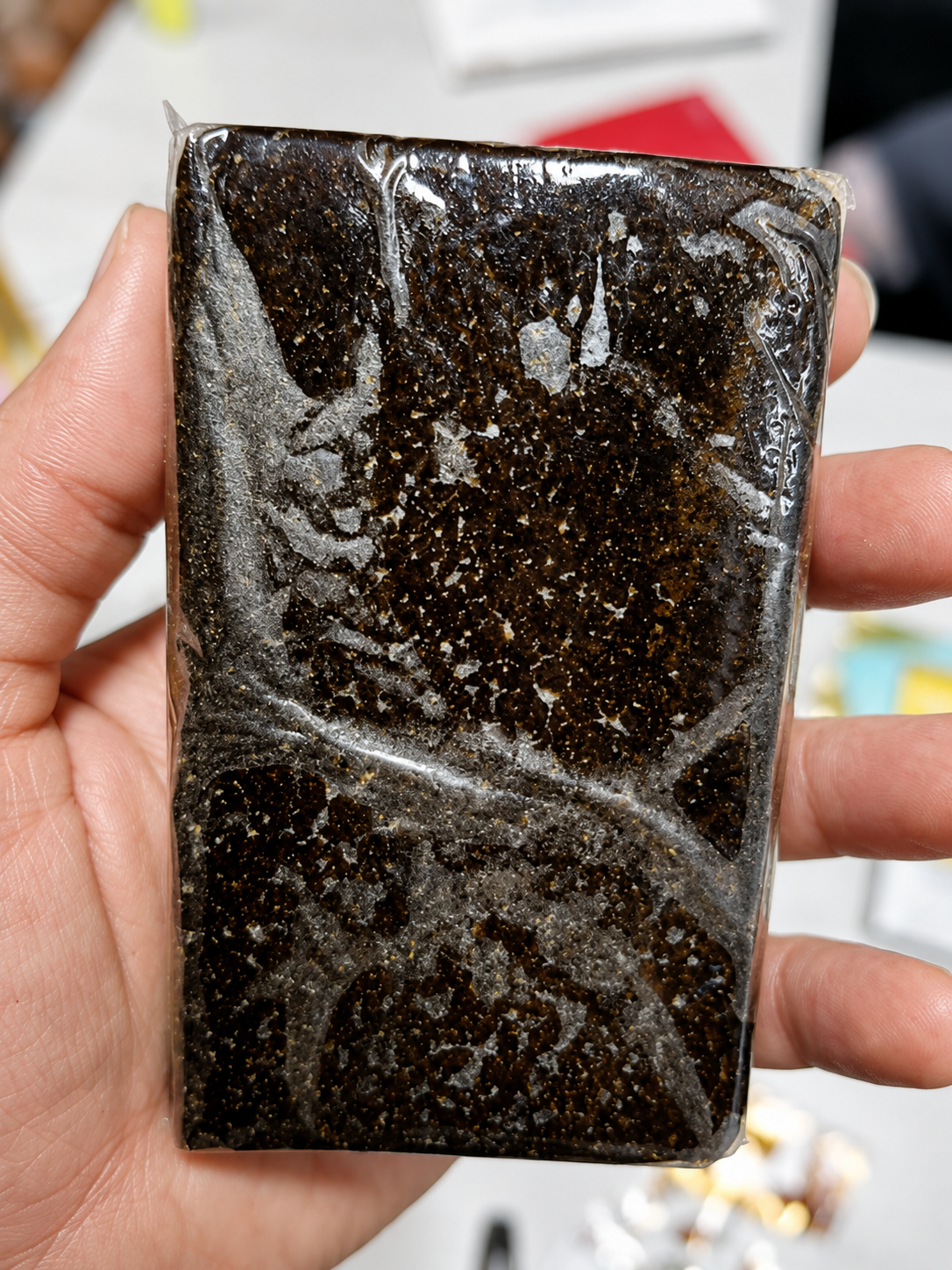
What Does Bubble Hash Look Like?
Bubble Hash comes in a wide range of colors.
Depending on the batch, it may appear:
- Pale cream
- Beige
- Blonde
- Light golden
- Tan
- Golden brown
- Medium brown
- Dark brown
- Slightly green or darker
Color is useful for describing a product, but it should never be the only factor used to judge quality.
A darker appearance can develop for several reasons, including oxidation, processing conditions, age, handling, storage, genetics, or additional plant material.
In the same way, a pale blonde appearance does not automatically prove exceptional purity.
A useful Bubble Hash quality guide considers color alongside texture, aroma, consistency, melt behavior, and product documentation.
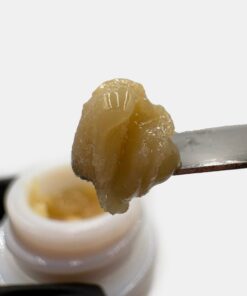
Understanding Bubble Hash Texture
Bubble Hash texture can change dramatically between products.
Some batches feel dry and sandy. Others are crumbly, soft, sticky, oily, tacky, or more cohesive.
Temperature can also influence consistency. Resin-rich material may become softer or more pliable in warmer conditions.
Texture can be affected by:
- Moisture level
- Drying practices
- Resin composition
- Storage temperature
- Processing method
- Age
- Handling
- Starting material
There is no single Bubble Hash texture that automatically represents the highest quality.
Instead, the texture should make sense for the product’s grade, storage condition, and processing style.
What Is Full Melt Bubble Hash?
Full melt Bubble Hash generally refers to highly refined hash that melts substantially when heated and leaves relatively little solid residue.
The term is frequently used when discussing resin-rich hash preparations.
However, full melt is not a universal laboratory certification.
It describes expected physical behavior rather than a standardized chemical measurement.
A product described as full melt should not automatically be assumed to have a particular THC level, terpene percentage, or purity rating.
Melt behavior cannot establish:
- THC concentration
- CBD concentration
- Terpene percentage
- Pesticide status
- Heavy-metal levels
- Microbial safety
- Overall contaminant profile
Those details require appropriate laboratory testing.
Bubble Hash Micron Grades Explained
Micron grades are an important part of understanding Bubble Hash filtration.
A micron number refers to the size of the openings in a filtration screen or bag. Different screen sizes collect different particle fractions.
Common micron sizes associated with hash processing include:
- 73 micron
- 90 micron
- 120 micron
- 160 micron
- 220 micron
These numbers should not be viewed as a simple quality scale.
For example, a lower micron number is not automatically better than a higher one.
Trichome size can vary between cannabis cultivars, maturity levels, and starting materials. Because of this, desirable resin fractions may occur at different filtration sizes.
Micron information is therefore valuable as processing context, but it does not independently guarantee potency, flavor, full-melt behavior, or purity.
How to Judge Bubble Hash Quality
Evaluating Bubble Hash quality works best when several characteristics are considered together.
Cleanliness
Highly refined material may contain less visible plant matter than a less refined preparation.
However, visual inspection cannot reveal every contaminant or quality issue.
Consistency
The product should have a reasonably consistent appearance and texture for its stated form.
Unexpected variation may indicate differences in handling, storage, or processing.
Aroma
A noticeable cannabis aroma can provide useful information about the sensory character of the product.
However, aroma does not establish potency or laboratory safety.
Texture
Texture can help describe moisture, resin behavior, and storage condition, but it should not be used alone to determine quality.
Melt Characteristics
Melt behavior can provide useful context, particularly for products marketed as full melt.
It still cannot replace laboratory analysis.
Documentation
When available, a Certificate of Analysis provides much stronger evidence about measurable product characteristics than appearance alone.
Why a Certificate of Analysis Matters
A Certificate of Analysis, or COA, can provide laboratory information that cannot be confirmed through color, texture, aroma, or melt behavior.
Depending on testing requirements, a laboratory report may include information about:
- Cannabinoid profile
- Potency
- Terpenes
- Pesticides
- Heavy metals
- Microbial contaminants
- Other relevant testing categories
Testing requirements vary, so not every report contains the same information.
It is also important to confirm that the COA matches the specific batch being evaluated.
Laboratory results from another product or production run should not automatically be applied to a different batch of Bubble Hash.
Bubble Hash and Solventless Concentrates
Bubble Hash belongs to the broader category of solventless concentrates because its main separation method does not depend on conventional chemical extraction solvents.
That does not mean every solventless product is the same.
Different solventless concentrates use different methods to separate or collect cannabis resin.
Bubble Hash focuses on cold-water trichome separation and filtration.
Other solventless products may rely on dry screening, pressure, heat, or combinations of these techniques.
Understanding the production method makes it easier to compare the final products accurately.
Bubble Hash vs Dry Sift
Dry sift uses mechanical screening without the ice-water stage associated with Bubble Hash.
Cannabis material is worked over screens so resin glands can separate from the plant material.
Bubble Hash also uses mechanical separation, but cold water and ice play a major role in the process.
Both methods can produce trichome-rich concentrates, although texture, refinement, and plant-material content can differ.
Bubble Hash vs Traditional Pressed Hash
Traditional pressed hash is typically made by collecting resin-rich material and compressing it into a cohesive form.
The finished hash may appear as blocks, slabs, balls, or other pressed shapes.
Bubble Hash can remain loose, granular, crumbly, soft, or resinous depending on processing and storage.
These products may both fall under the broader hash category, but their production and handling methods can create very different physical characteristics.
Bubble Hash vs Rosin
Rosin is another solventless cannabis concentrate, but it is produced differently.
Rosin production relies on mechanical pressure and heat to release resinous material.
Bubble Hash focuses on separating trichomes through ice water and filtration.
Bubble Hash can also be used as starting material for hash rosin, which creates another important link between the two concentrate categories.
Bubble Hash vs Live Resin
Bubble Hash and live resin should not be treated as interchangeable products.
Bubble Hash is associated with mechanical ice-water separation.
Live resin is generally produced through solvent-based extraction techniques.
The simplest distinction is:
Bubble Hash: ice water and mechanical separation
Rosin: pressure and heat
Live Resin: typically solvent-based extraction
Each category has its own production method, texture, and product characteristics.
How to Store Bubble Hash
Proper storage helps preserve the condition of Bubble Hash over time.
Heat, oxygen, light, moisture, and repeated handling can affect aroma, color, texture, and consistency.
General storage principles include:
- Keep the container properly sealed.
- Reduce unnecessary exposure to air.
- Protect the product from direct sunlight.
- Avoid excessive heat.
- Prevent moisture and contamination.
- Follow product-specific storage directions when provided.
Different products may require different storage conditions, so manufacturer guidance should take priority when available.
How to Understand Bubble Hash Marketing Claims
Many terms used in the hash market sound more precise than they actually are.
Consumers should be careful with unsupported claims involving:
- Exact THC percentages
- Exact terpene percentages
- Purity percentages
- Specific micron claims
- Full-melt guarantees
- Medical effects
- Laboratory results without documentation
- Broad quality claims without supporting information
A trustworthy Bubble Hash description should clearly separate documented information from promotional language.
For example, a product being marketed as full melt does not automatically mean laboratory testing has established a particular purity level.
Is Dark Bubble Hash Lower Quality?
No, not necessarily.
Bubble Hash color can change because of genetics, oxidation, plant material, processing, age, storage, and handling.
A darker batch may behave differently from a blonde one, but color cannot independently determine which product is better.
The reverse is also true.
A very pale product is not automatically premium.
A more meaningful evaluation looks at color together with aroma, texture, consistency, refinement, melt behavior, storage condition, and laboratory documentation.
What Makes High-Quality Bubble Hash?
There is no single feature that proves a Bubble Hash product is high quality.
A stronger assessment considers:
- Quality starting material
- Effective trichome separation
- Consistent processing
- Minimal unwanted plant material
- Appropriate texture
- Desirable aroma
- Suitable melt characteristics
- Proper drying
- Careful handling
- Appropriate storage
- Reliable product information
- Batch-specific laboratory documentation where available
Quality is best understood as the combination of these factors rather than one attractive color, texture, or marketing term.
Frequently Asked Questions About Bubble Hash
What is Bubble Hash?
Bubble Hash is a cannabis concentrate made by separating resin-rich trichomes from cannabis plant material, commonly using ice, cold water, agitation, and filtration.
Is Bubble Hash the same as ice water hash?
The terms are commonly used interchangeably because Bubble Hash is closely associated with ice-water separation.
Is Bubble Hash solventless?
Yes. It is generally considered solventless because the main separation method does not depend on conventional chemical extraction solvents.
What does full melt Bubble Hash mean?
Full melt generally describes highly refined hash that melts substantially when heated and leaves relatively little solid residue.
What does micron mean in Bubble Hash?
Micron numbers describe filtration screen sizes. Different screens collect different particle fractions during the separation process.
Is a lower micron grade always better?
No. Micron size alone does not determine quality because desirable trichome fractions can vary according to genetics and processing conditions.
What color should Bubble Hash be?
Bubble Hash may range from pale cream or blonde to golden, tan, brown, or darker shades. No single color guarantees quality.
Does Bubble Hash contain THC?
Cannabis-derived Bubble Hash can contain THC and other cannabinoids. Exact concentrations depend on the batch and should be confirmed through laboratory testing.
How should Bubble Hash be stored?
Keep it sealed and protected from excessive heat, direct light, moisture, contamination, and unnecessary air exposure. Follow product-specific instructions when available.
How can Bubble Hash quality be verified?
Consider appearance, texture, aroma, consistency, refinement, melt characteristics, product information, and credible laboratory documentation together.
Final Thoughts on Bubble Hash
Bubble Hash remains one of the most recognizable forms of solventless hash because of its distinctive ice-water separation process.
Its quality cannot be judged by color, texture, micron grade, or melt behavior alone. Each characteristic provides useful information, but none offers the complete picture.
Understanding terms such as ice water hash, full melt, solventless concentrate, trichomes, and micron grades makes it easier to compare products without relying on exaggerated marketing claims.
A strong Bubble Hash evaluation considers how the product was made, its physical consistency, aroma, appearance, refinement, storage condition, and available documentation.
When exact cannabinoid levels, terpene content, or contaminant information matters, batch-specific laboratory testing remains the most reliable source.
| Quantity | 25g, 50g, 100g, 500g |
|---|
1 review for Bubble Hash
Add a review
Related products
Extracts
Jack –
Really good shipping experience. I received useful updates and my package arrived as expected.