

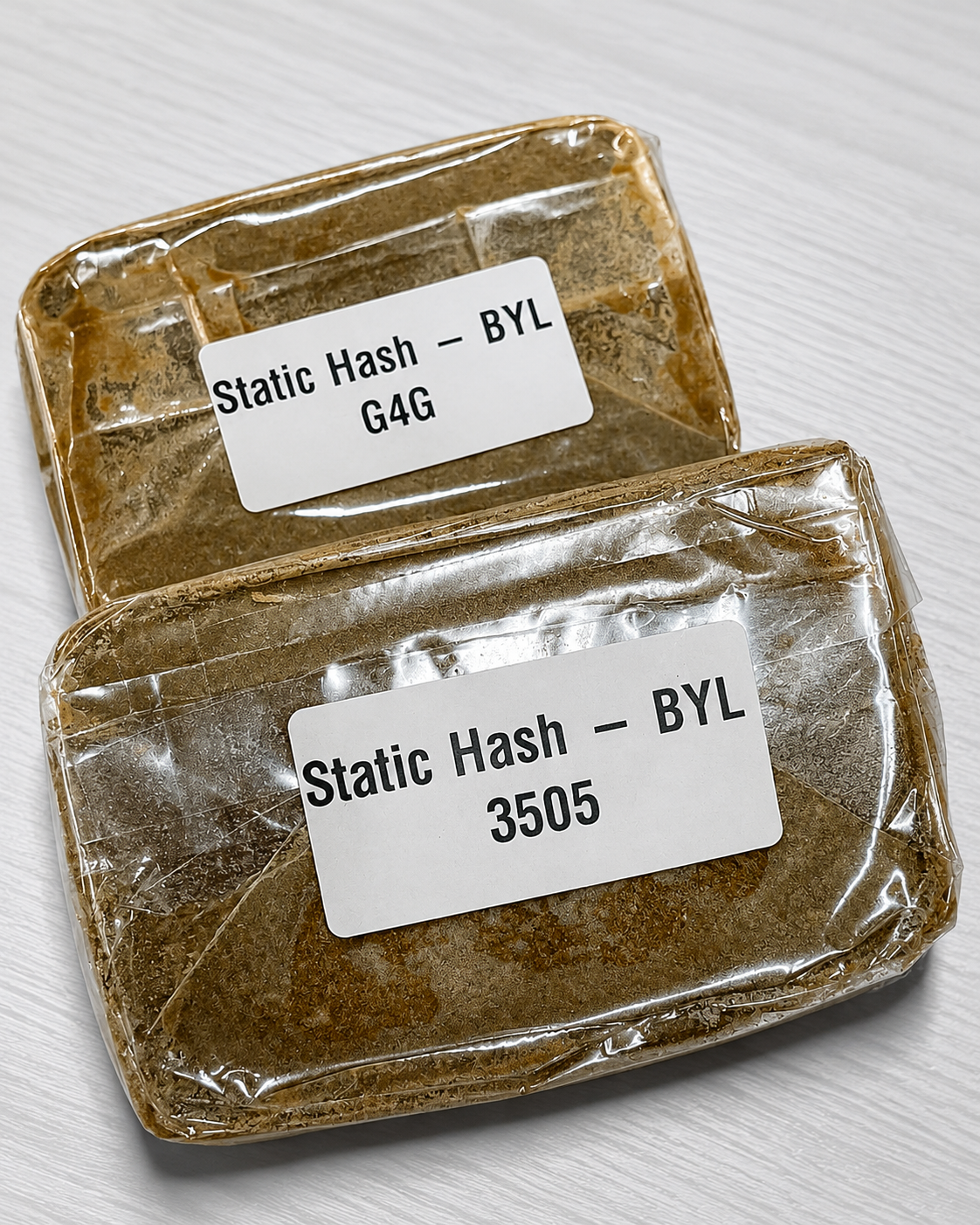
Static Hash Explained: Refinement, Texture, Aroma, Quality & Storage Guide
Static Hash stands out in the cannabis concentrate category because the focus is not simply on collecting resin. The important part is how carefully that resin is separated from the surrounding plant material.
At its core, Static Hash is associated with refined dry-sift processing and the use of electrostatic behavior to help separate desirable trichome-rich material from unwanted plant particles. The result can be a cleaner and more concentrated resin fraction before the hash reaches its finished form.
That makes Static Hash different from products where collected sift is simply compressed with minimal additional refinement.
Still, the name should be understood carefully. Static Hash is not one standardized recipe, grade, color, texture, or potency level. Different starting materials and processing techniques can produce noticeably different results.
For someone researching Static Hash, the useful questions are therefore not limited to how strong it might be. It is more important to understand what static refinement means, why trichomes matter, how the finished material can look and feel, what influences aroma, and how quality should actually be evaluated.
Static Hash at a Glance
Here is the simplest way to understand the product category before getting into the finer details.
| Detail | Static Hash |
|---|---|
| Product category | Cannabis hash / concentrate |
| Main material | Cannabis resin glands |
| Separation style | Dry mechanical separation |
| Refinement concept | Static/electrostatic separation |
| Finished form | Loose or compacted resin |
| Texture | Varies with processing and temperature |
| Color | Batch and material dependent |
| Aroma | Determined largely by starting material |
| Potency | Product or batch specific |
| Quality | Depends on material and processing |
| Testing | Applicable laboratory documentation |
The defining idea is selective resin refinement, not one guaranteed specification.
Why Static Hash Starts With Trichomes
Understanding cannabis trichomes makes the entire Static Hash concept much easier to follow.
Cannabis flowers develop tiny structures commonly called trichomes. To the naked eye, dense trichome coverage can give flowers their familiar frosted or crystal-like appearance.
Glandular trichomes are particularly relevant to hash production because they contain cannabis resin.
This resin contains cannabinoids and aromatic compounds naturally associated with the plant. Hashmaking aims to separate and concentrate that resin instead of retaining most of the surrounding flower material.
Static refinement takes the separation process further.
Rather than treating every particle collected during sifting as equally desirable, refinement attempts to increase the proportion of resin-rich material while reducing unwanted plant particles.
The quality and condition of those original trichomes therefore have a major influence on the final hash.
What Exactly Is Static Hash?
Static Hash generally describes hash produced using dry-sift-style separation followed by additional refinement involving electrostatic properties.
The starting cannabis material is mechanically processed so that resin glands can separate from larger plant structures.
Initial sift is not necessarily pure resin.
Fine particles of plant material can travel through screens alongside trichomes, leaving the collected material with varying degrees of contamination.
This is where static refinement becomes important.
Different particles can respond differently to surfaces and electrostatic forces. Skilled processors use those differences to further separate desirable resin material from less desirable particles.
The objective is a more selectively refined resin fraction.
That material can remain relatively loose or receive additional handling and compression depending on how the producer wants to present the finished hash.
Techniques differ, so two products carrying the Static Hash name can still have noticeably different characteristics.
What Does “Static” Mean in Static Hash?
The word static refers to the electrostatic principles involved in the refinement process.
After dry separation, the collected material can contain both resin glands and tiny pieces of plant matter.
Static-based refinement takes advantage of differences in how these particles interact with charged surfaces and materials.
That gives a hashmaker another way to sort the collected sift.
The concept sounds highly technical, but the goal is straightforward:
keep more desirable resin material while separating more unwanted plant material.
How effectively this happens depends on the processor, starting material, environmental conditions, equipment, and handling technique.
Static refinement is therefore better understood as a processing approach rather than an automatic quality grade.
From Cannabis Material to Refined Resin
Producing quality Static Hash begins long before the refinement stage.
The cannabis used for processing needs suitable resin development. Genetics, cultivation, harvest timing, drying, handling, and storage can all influence the condition of the trichomes available for separation.
The material is then processed through dry mechanical separation.
Screens or related techniques allow smaller resin-rich particles to separate from larger pieces of plant material.
What comes through is collected as sift.
At this point, additional refinement can improve the resin-to-plant-material ratio.
Static techniques provide a way to continue that separation without turning the process into an entirely different concentrate category.
Once the desired fraction has been collected, the resin can be handled according to the producer’s preferred final presentation.
This is why the quality of Static Hash cannot be judged by the refinement method alone. Every stage contributes to the finished material.
Why Starting Material Matters So Much
Excellent refinement cannot magically transform poor cannabis into exceptional resin.
The starting material determines what is available to collect in the first place.
Cultivars differ naturally in resin production, aromatic character, trichome structure, and other traits relevant to hashmaking.
Plant maturity also matters.
Harvesting decisions can influence the condition of the resin glands entering the process. Drying and storage can then affect them further before separation even begins.
Poor handling can introduce additional plant debris or damage delicate material.
For this reason, experienced hashmakers generally view starting material and processing as interconnected.
Good cannabis does not automatically guarantee good hash, because separation can still be poorly executed.
Likewise, sophisticated refinement cannot fully compensate for weak starting material.
The best results depend on both.
Static Hash vs Regular Dry Sift
Static Hash and dry sift are closely connected, but the terms describe slightly different ideas.
Dry sift refers broadly to resin collected through dry mechanical separation. Cannabis material is passed over screens or processed through related methods so trichomes can separate from the plant.
The collected sift may contain different amounts of plant material depending on how carefully it was produced.
Static refinement introduces another sorting stage.
| Characteristic | Static Hash | Standard Dry Sift |
|---|---|---|
| Dry separation | Yes | Yes |
| Trichome collection | Central to process | Central to process |
| Additional refinement | Static/electrostatic focus | Not necessarily |
| Plant-material reduction | Key objective | Depends on grade |
| Finished texture | Variable | Variable |
| Quality | Process dependent | Process dependent |
The important distinction is therefore additional refinement, not the idea that one label automatically guarantees better hash.
A carefully produced dry sift can be excellent. A poorly handled product does not become exceptional simply because someone calls it Static Hash.
Static Hash vs Traditional Hash
Traditional hash covers an enormous range of products and regional techniques.
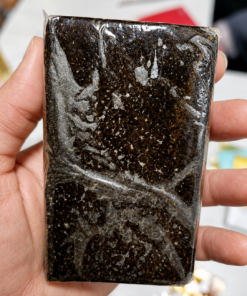
Historically, resin-rich cannabis material has been collected, worked, pressed, and shaped into different forms. Finished hash may be firm, pliable, crumbly, sticky, dark, golden, brown, or nearly black depending on the material and process.
Static Hash places more emphasis on refining the sift before the final material is formed.
That difference can be easy to miss once the finished resin has been pressed.
A compact piece of Static Hash may visually resemble another form of pressed hash. Looking at the finished shape alone therefore cannot tell you exactly how the resin was separated.
The more meaningful distinction is found earlier in production.
Static processing focuses on selectively cleaning the collected resin fraction before it becomes the finished product.
Static Hash vs Rosin
Static Hash and rosin are also different products, even though both can fall under the broader world of cannabis concentrates.
Static Hash centers on mechanical trichome separation and refinement.
Rosin involves applying heat and pressure to suitable cannabis material or resin to express an oil-rich concentrate.
That means Static Hash itself should not automatically be described as rosin.
However, refined hash can potentially serve as starting material for other concentrate processes, which is one reason consumers sometimes encounter the terms within similar conversations.
For a product page, keeping the categories separate prevents unnecessary confusion.
If something is sold specifically as Static Hash, describe the characteristics of the hash itself rather than assigning it the processing method of another concentrate category.
Static Hash vs Live Resin
Live resin represents another distinct concentrate category.
The term is generally associated with cannabis material preserved in a fresh or frozen state before extraction.
Static Hash, by comparison, is associated with mechanical separation and refinement of resin glands.
The two names therefore describe different processing concepts.
Neither term alone tells you an exact THC percentage, terpene concentration, or quality grade.
This is important because concentrate terminology often becomes oversimplified online. Sellers may treat every premium-sounding term as though it means “stronger.”
A better comparison looks at what the terminology actually tells you about the product.
With Static Hash, the defining story is trichome separation and refinement.
What Does High-Quality Static Hash Look Like?
There is no single color that proves Static Hash is high quality.
Depending on the cannabis material, trichome maturity, processing, oxidation, storage, compression, and lighting, the resin may appear:
- Pale cream
- Beige
- Light golden
- Yellowish
- Tan
- Brown
- Darker after handling or aging
The physical presentation can vary as well.
Loose refined resin may have a granular or sandy appearance. Once compressed or worked, the same material can become more cohesive.
This is why judging hash entirely from photographs can be misleading.
A very light product is not automatically purer or stronger. Likewise, darker material should not immediately be dismissed as poor quality.
Color is descriptive information.
It is not a cannabinoid test, contaminant screen, or universal grading system.
Understanding Static Hash Texture
Texture can reveal a lot about how hash behaves, but it should still be interpreted carefully.
Before compression, refined resin may appear fine, loose, sandy, or granular.
After pressing and handling, it can become denser.
Some batches may remain relatively dry or crumbly. Others can soften considerably when warmed and become more pliable or sticky.
Several variables influence this behavior.
The original resin composition matters, as do temperature, storage conditions, pressure, handling, and age.
This explains why two Static Hash products can feel completely different even though they belong to the same general concentrate category.
Texture should therefore be described as a characteristic of the particular material rather than a permanent rule for every Static Hash product.
Why Does Static Hash Become Sticky?
Temperature is one of the first things to consider when hash becomes noticeably softer or stickier.
Cannabis resin can respond quickly to warmth.
A piece that feels relatively firm in a cool environment may soften after being handled or exposed to higher temperatures.
Its specific resin composition can influence this behavior too.
That does not automatically mean something has gone wrong.
The important question is whether the texture change corresponds with ordinary temperature and handling conditions or accompanies other signs of deterioration.
Repeated exposure to excessive heat is still undesirable because storage conditions can affect more than texture.
Aromatic characteristics can change as well.
For this reason, consistent storage conditions are preferable to repeatedly warming and cooling the material.
Why Can Static Hash Become Hard?
The opposite change can happen in cooler environments.
Lower temperatures can make certain hash products noticeably firmer.
Compression and storage history can contribute as well.
A dense piece of pressed resin may therefore feel considerably harder than loose sift produced from similar starting material.
Again, firmness alone does not tell you potency.
It mainly describes the physical condition of the resin at that moment.
Allowing a product to remain under appropriate storage conditions is generally more sensible than aggressively heating it simply to alter its consistency.
Hash texture naturally responds to its environment, and that behavior is part of understanding resin rather than automatically treating every change as a defect.
What Determines Static Hash Aroma?
Aroma starts largely with the cannabis used to make the hash.
Different cultivars produce different combinations of aromatic compounds, including terpenes.
As a result, Static Hash may present aromas commonly described as:
- Citrus
- Earthy
- Fruity
- Herbal
- Sweet
- Pine-like
- Floral
- Woody
- Spicy
- Fuel-like
These are broad sensory categories, not a universal Static Hash flavor profile.
One batch may lean heavily toward fruit or citrus, while another could have earthy or fuel-like characteristics.
Processing and storage can influence the final aroma as well.
Exposure to excessive heat, oxygen, light, and time can alter delicate aromatic compounds.
That makes the condition and history of the resin relevant when assessing aroma.
Static Hash and Terpene Character
Terpenes contribute significantly to the recognizable aromas associated with cannabis.
Because hash concentrates resin glands, aromatic compounds present in that resin can become an important part of the finished product’s identity.
Still, the phrase Static Hash does not establish one terpene profile.
The cultivar used, trichome condition, processing, handling, and storage all influence what remains in the final material.
This is why generic descriptions claiming every Static Hash tastes or smells the same are not particularly useful.
When product-specific terpene information exists, it should be connected to that product or batch.
Without such information, sensory descriptions should remain descriptive rather than being presented as laboratory measurements.
What Separates Refined Static Hash From Lower-Grade Sift?
The central difference is the proportion of desirable resin relative to unwanted material.
Initial dry separation can collect more than trichomes.
Fine pieces of plant tissue can make their way into the sift, particularly when processing is less selective.
Further refinement aims to reduce that material.
A cleaner resin fraction may have a more uniform appearance and noticeably resin-focused texture.
But refinement is not simply about making something look attractive.
The real objective is separating the material more selectively.
This distinction matters because photography, lighting, and processing can make a product look exceptionally clean without proving its composition.
Visual refinement can be informative, but laboratory analysis and traceable product information answer questions that appearance cannot.
Five Things That Shape Static Hash Quality
The finished product reflects several stages rather than one single technique.
1. Cannabis Selection
Resin development begins with the plant.
Different cultivars can produce substantially different trichome structures, aromatic profiles, and amounts of resin.
2. Trichome Condition
Maturity and preservation influence the resin entering the separation process.
Harvest timing and post-harvest handling therefore matter.
3. Initial Separation
Dry sifting needs to collect useful resin while limiting unnecessary plant material.
The quality of this stage affects what is available for further refinement.
4. Static Refinement
Careful electrostatic separation can improve the ratio of resin-rich material to plant particles.
Processor skill matters significantly here.
5. Post-Processing Storage
Even well-made hash can change when poorly stored.
Temperature, oxygen, light, and repeated handling can influence texture and aromatic character over time.
Together, these factors provide a much better picture of quality than one marketing label.
Does Static Hash Have More THC?
Static refinement does not provide a universal THC percentage.
Hash concentrates cannabis resin, so cannabinoid concentrations can differ considerably from those found in ordinary flower. However, that does not mean every Static Hash product contains the same amount.
Starting material matters.
Separation matters.
The finished resin fraction matters.
Individual batches can therefore have different analytical profiles.
For anyone searching Static Hash THC percentage, the appropriate answer comes from reliable testing connected to the relevant product.
Appearance cannot provide that number.
Neither can texture, aroma, stickiness, color, or the Static Hash name itself.
When analytical results are unavailable, assigning a precise potency figure would create false certainty rather than useful product information.
Purity Means More Than Looking Clean
A highly refined appearance can suggest that less visible plant material remains, but visual purity and laboratory purity are not the same thing.
Some concerns cannot be reliably detected by sight or smell.
Depending on applicable testing programs, cannabis laboratory analysis can examine areas such as cannabinoid content and selected contaminants.
That matters because a clean-looking piece of resin cannot visually prove the absence of pesticides, heavy metals, microbial contamination, or other unwanted substances.
The same principle applies in reverse.
Color differences alone do not establish contamination.
This is why responsible product evaluation combines sensory observations with documentation instead of treating appearance as scientific evidence.
What a Static Hash COA Can Tell You
A Certificate of Analysis, or COA, provides analytical results for a tested sample.
Depending on local regulations and the laboratory program, a report may cover information such as:
- Cannabinoid concentrations
- Pesticide screening
- Heavy metals
- Microbial screening
- Mycotoxins
- Other applicable contaminants
Testing requirements vary between jurisdictions.
The most important detail is whether the documentation actually belongs to the product being evaluated.
A laboratory report from an unrelated cultivar or batch should not be used to assign numbers to another Static Hash product.
Where identifying information is available, compare the batch, product description, testing date, and other relevant details.
That creates far stronger evidence than a potency figure copied from an unrelated online listing.
How to Judge Static Hash Without Falling for Marketing
Start with traceability rather than superlatives.
Look for clear product information, identifiable origin where applicable, batch details, and relevant testing documentation.
Then consider the physical characteristics.
Texture and appearance can help you understand how the material was presented and stored. Visible amounts of plant material may also provide clues about the degree of refinement.
Aroma offers another sensory reference.
The product should reflect the characteristics of its starting cannabis rather than conforming to one generic “Static Hash smell.”
Finally, consider storage history.
Quality resin can still deteriorate when repeatedly exposed to unsuitable conditions.
Evaluating these factors together produces a more useful assessment than assuming words such as “premium,” “full melt,” or “static” automatically establish quality.
Common Static Hash Myths
“Static automatically means top grade.”
No single processing term guarantees the quality of the starting material or execution.
“The lightest hash is always the best.”
Color varies for numerous reasons and should not be treated as a universal grading system.
“Static Hash has one standard THC level.”
It does not. Cannabinoid results depend on the actual product and batch.
“You can verify purity by looking at it.”
Appearance cannot replace appropriate analytical testing.
“Every producer uses the same static method.”
Hashmakers can use different equipment, handling practices, refinement approaches, and terminology.
“Static Hash and rosin are the same.”
They are different concentrate categories based on different processing concepts.
Understanding these distinctions makes it easier to evaluate products based on meaningful information rather than assumptions.
How to Store Static Hash Properly
Storage can noticeably influence resin over time.
Protect Static Hash from excessive heat, strong light, moisture, and unnecessary exposure to air.
Stable conditions are generally preferable to repeated temperature swings.
Heat can soften resin and affect aromatic compounds, while cooler conditions can make the material firmer.
Keep the product appropriately sealed when it is not being handled.
Minimizing unnecessary handling can also help preserve its physical condition.
For longer storage, follow any product-specific directions supplied with the hash.
If cold storage is used, avoid unnecessary condensation by keeping the product sealed while it gradually adjusts toward the surrounding temperature.
As with all cannabis products, store it securely somewhere inaccessible to children and pets.
Why Static Hash Has Earned Attention
Static Hash is interesting because it demonstrates how much difference refinement can make in traditional resin processing.
Hashmaking itself is not new.
People have separated and concentrated cannabis resin for generations. What has evolved are the tools and techniques available for controlling that separation.
Static refinement adds another selective step to dry-sift processing.
Rather than accepting everything that passes through a screen, the processor can continue sorting the collected material based on differences in particle behavior.
That creates an intersection between traditional hashmaking and increasingly precise resin handling.
For concentrate enthusiasts, the appeal is therefore not simply potency.
It is the attention paid to the resin itself: how it was collected, how much plant material was removed, how the trichomes were preserved, and how the finished product was handled.
Static Hash Frequently Asked Questions
What is Static Hash?
Static Hash is a cannabis hash style generally associated with dry-sift resin that receives additional refinement using electrostatic separation principles.
What is Static Hash made from?
It is made from resin-rich cannabis material. Trichomes are mechanically separated from plant matter and refined to increase the proportion of desirable resin material.
Is Static Hash different from dry sift?
They are closely related. Dry sift describes mechanical resin collection, while Static Hash generally emphasizes an additional electrostatic refinement stage.
Is Static Hash the same as traditional pressed hash?
Not exactly. Traditional hash covers many methods. Static Hash is distinguished primarily by its approach to refining sift before the finished material is formed or pressed.
Is Static Hash rosin?
No. Rosin involves heat and pressure to express concentrate, while Static Hash centers on mechanical separation and static refinement.
Is Static Hash live resin?
No. Live resin is associated with a different concentrate-processing category. Static Hash is centered on trichome separation rather than that extraction approach.
Does Static Hash contain THC?
Static Hash made from THC-containing cannabis can contain THC naturally present in the collected resin. Exact concentrations require appropriate product-specific testing.
What color should good Static Hash be?
There is no universal correct color. Starting material, maturity, processing, storage, oxidation, and compression can all influence appearance.
Why is my Static Hash soft or sticky?
Warm conditions can soften cannabis resin. Composition, handling, and storage history can also affect consistency.
Can Static Hash become hard?
Yes. Cooler temperatures and compression can make hash considerably firmer.
Does Static Hash have a strong aroma?
It can have a noticeable cannabis aroma because the material concentrates resin containing aromatic compounds. The exact character depends largely on the cannabis used.
How do you determine Static Hash quality?
Consider starting material, refinement, visible plant contamination, aroma, handling, storage, traceability, and relevant laboratory documentation together rather than relying on one characteristic.
Final Take on Static Hash
Static Hash is best understood as a refined approach to traditional cannabis resin separation.
Its defining feature is not one color, potency number, texture, or flavor. The important difference lies in the effort to separate resin-rich trichomes more selectively from unwanted plant material through dry processing and static refinement.
That makes starting material especially important. Resin quality, trichome condition, separation, processor skill, handling, and storage all contribute to the finished result.
A pale color does not automatically establish premium quality. Stickiness does not prove potency. A strong aroma cannot verify cannabinoid concentration. And the word “static” itself is not a laboratory grade.
The better way to evaluate the product is to look at the complete picture.
Understand the cannabis material used, consider how carefully the resin appears to have been refined, pay attention to texture and aroma, examine product traceability, and use applicable batch-specific laboratory information when potency or contaminant testing matters.
That approach explains what makes Static Hash genuinely interesting: it puts the quality of resin separation at the center of the product rather than relying on exaggerated specifications to create value.
| 50g | BYL G4G, BYL 3505 |
|---|
Be the first to review “Static Hash”
Related products

Extracts


Reviews
There are no reviews yet.