

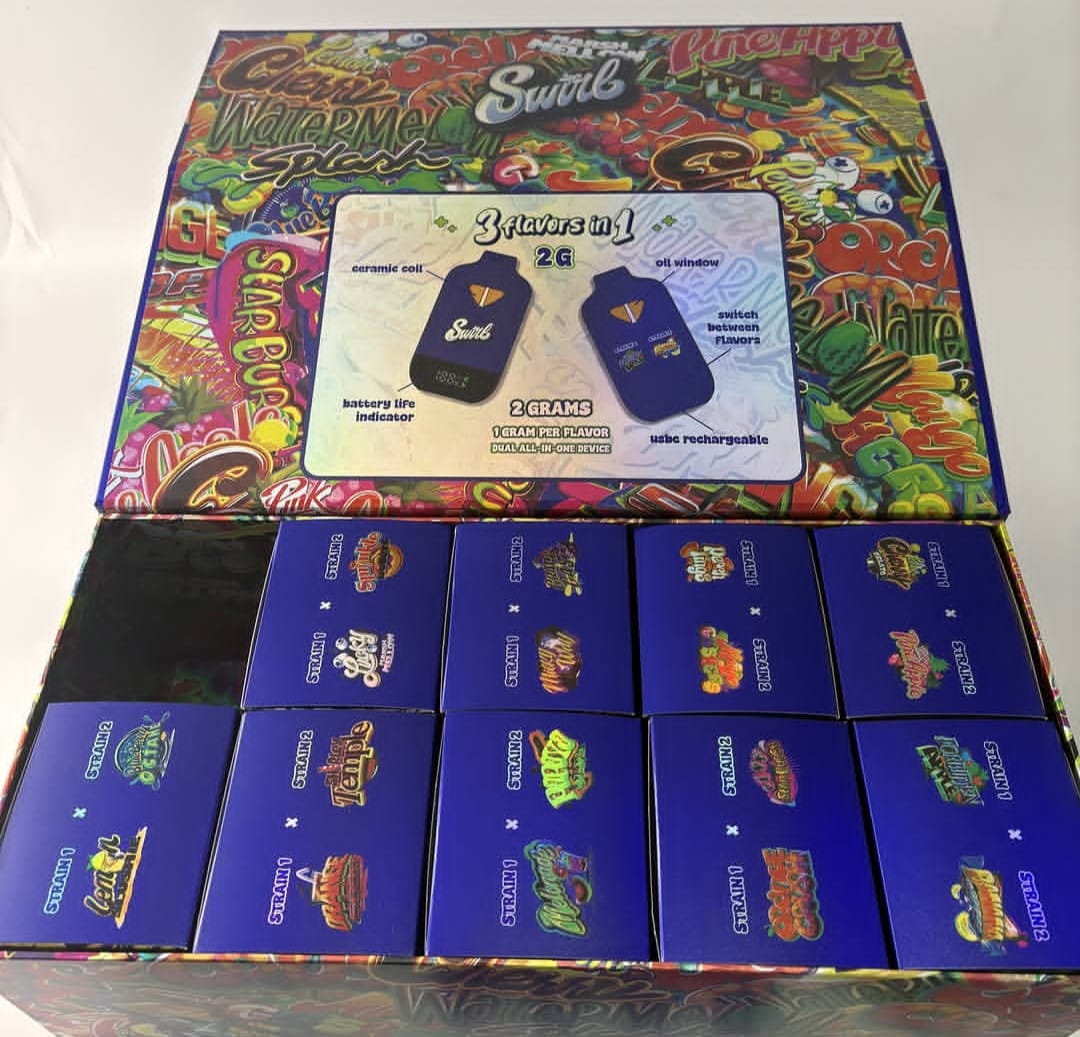
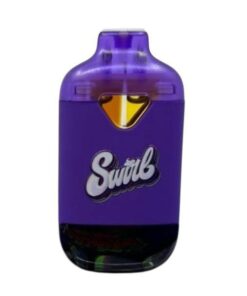
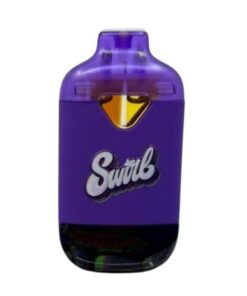
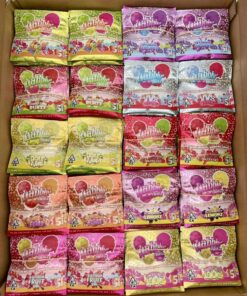
Swirl Disposable Bulk
$799.00
Swirl Disposable Bulk refers to larger-quantity ordering of Swirl disposable products for licensed cannabis retailers and other eligible businesses. Bulk purchasing is mainly about inventory planning, product variety, storage, compliance, and managing stock efficiently rather than buying units one at a time.
Swirl Disposable Bulk: Wholesale Guide for Retail Buyers
Buying Swirl products in bulk is different from picking up a few individual devices.
For a retailer, the question is not simply, “How many should I order?”
The better questions are:
Which products are customers actually asking for? How much stock can the store move before it sits too long? How much storage space is available? Are the products legal to purchase and resell in the business’s jurisdiction? And does the assortment make sense for the type of customers the store already serves?
That is the right way to think about Swirl Disposable Bulk.
Bulk ordering is mainly an inventory-management decision.
A larger order may reduce the amount of time spent reordering and can make it easier to maintain consistent shelf availability, but ordering too aggressively can create unnecessary stock pressure.
The goal is not simply to buy more.
It is to carry the right amount.
What Does Swirl Disposable Bulk Mean?
Swirl Disposable bulk purchasing refers to ordering multiple units at once rather than purchasing individual products separately.
For licensed retailers, this can be part of normal inventory procurement.
Instead of restocking a handful of devices every time demand increases, a retailer may order larger quantities so popular products remain available.
Bulk inventory can also make it easier to build a wider assortment of Swirl products rather than relying on only one or two options.
The exact quantities, available products, wholesale terms, and eligibility requirements depend on the authorized supplier handling the order.
That makes supplier verification an important part of the process.
Who Is Swirl Disposable Bulk Intended For?
The clearest use case is a properly licensed cannabis retailer that needs inventory for lawful resale.
This can include dispensaries and other businesses permitted to sell cannabis vape products within their jurisdiction.
Bulk ordering may make sense for retailers that:
- Already sell disposable cannabis vapes regularly
- Need deeper inventory of popular products
- Want a wider selection of Swirl options
- Restock frequently
- Have enough secure storage space for larger orders
- Can document the required business licensing
- Have a clear system for monitoring inventory movement
Bulk purchasing should be approached as a business supply decision, not simply as a way to accumulate a large quantity of cannabis products.
Why Retailers Consider Swirl Disposable Bulk Orders
The biggest reason is consistency.
Running out of a product that customers regularly ask for creates an obvious inventory problem.
A retailer then has to wait for another shipment, potentially losing sales while the item remains unavailable.
Carrying more inventory can reduce that problem.
Bulk ordering can also simplify procurement because fewer individual restocking orders may be necessary.
That can help businesses spend less time repeatedly checking the same products and more time managing overall inventory.
But there is a balance.
Stock that moves quickly is useful.
Stock that sits for too long takes up space and ties up working capital.
Start With Demand, Not Order Size
A common mistake in wholesale purchasing is starting with the discount instead of starting with actual demand.
A larger quantity only makes sense when the retailer can reasonably move it.
Before increasing an order, look at recent sales patterns.
Ask:
Which Swirl products sell consistently?
Which ones move slowly?
Do customers return for the same products?
Are certain options noticeably more popular?
How long does the average unit stay in inventory?
That information gives you a much better basis for ordering than simply choosing the largest quantity available.
Swirl Bulk Ordering and Product Assortment
A good bulk order does not necessarily mean buying a huge quantity of one product.
Sometimes assortment matters more.
If the Swirl range contains multiple product options, carrying a balanced selection can help retailers learn what customers actually prefer.
That is especially useful for stores introducing Swirl for the first time.
Instead of overcommitting to one SKU, a retailer can evaluate how different products perform and adjust later orders based on real sales data.
Over time, the assortment can become more focused.
Fast-moving items receive deeper inventory.
Slower products receive smaller allocations.
That is a much healthier approach than treating every product equally.
How to Plan a Swirl Disposable Bulk Order
Wholesale ordering works better when it begins with a simple inventory plan.
Review Current Sales
Look at how quickly similar disposable products are moving.
If the store already carries Swirl, review its recent sell-through rate.
Identify Fast-Moving Products
Products that consistently sell are usually safer candidates for deeper inventory than items customers rarely request.
Check Available Storage
Larger orders require appropriate storage space.
Do not place a bulk order without knowing where the inventory will be stored securely.
Consider Reorder Timing
The goal is to reorder before stock reaches zero without carrying unnecessarily excessive inventory.
Keep Compliance in the Process
Any order should fit the licensing, product-tracking, transportation, and resale requirements that apply to the business.
Wholesale Inventory Is About Turnover
One of the most useful numbers for a retailer is inventory turnover.
In simple terms, turnover tells you how quickly products are selling and being replaced.
A fast-moving item may justify a larger order.
A slow-moving item usually does not.
This matters because cannabis inventory is not something a retailer wants sitting indefinitely.
Products occupy shelf space, storage capacity, and cash.
A good wholesale strategy keeps enough inventory available without allowing unnecessary overstock to build up.
Avoid Overstocking Swirl Disposables
Bulk buying can become counterproductive when a business purchases more than it can realistically sell.
Overstock creates several problems.
The business has more money tied up in inventory.
Storage space disappears faster.
Inventory counts become harder to manage.
Older stock may remain behind newer arrivals.
That is why retailers should scale Swirl orders gradually unless they already have strong sales data supporting a larger purchase.
A controlled increase based on real demand is safer than guessing.
Minimum Order Quantities
Wholesale suppliers may establish minimum order quantities, often called MOQs.
An MOQ simply means the smallest quantity a buyer must order to qualify for that wholesale transaction.
The specific requirement varies by supplier.
Some suppliers structure ordering around cases.
Others may have minimum purchase values or different account requirements.
Retailers should confirm the current terms directly through the authorized wholesale channel they are using.
Do not build an inventory plan around assumed minimum quantities.
How Wholesale Pricing Usually Works
Wholesale pricing is generally based on quantity and supplier terms.
Larger orders may qualify for different pricing tiers, but the exact structure can vary.
For a retailer, the important number is not simply the wholesale price.
The more useful calculation is the total landed cost.
That can include:
- Product cost
- Applicable taxes
- Shipping or delivery charges
- Compliance-related expenses
- Storage costs
- Other business overhead
Looking only at the unit price can make an order seem more attractive than it really is.
Calculate Margin Before Ordering
For a lawful retail business, margin matters.
But margin should be calculated before the purchase rather than after inventory arrives.
A simple retail margin calculation starts with:
Retail Price − Total Product Cost = Gross Profit
Then consider how much of that gross profit is affected by operating expenses.
A lower wholesale price may appear attractive, but buying excessive stock to reach that price can create other costs.
The best order is not automatically the one with the lowest possible unit cost.
It is the order that makes sense for actual demand and business cash flow.
Why Cash Flow Matters With Bulk Inventory
Inventory uses cash before it generates revenue.
That is easy to forget when a bulk price looks attractive.
A retailer might technically save on each unit while still creating a cash-flow problem by purchasing far more inventory than necessary.
That is why bulk orders should fit the store’s financial rhythm.
Inventory that sells steadily converts back into cash.
Inventory that sits does not.
A sustainable ordering system protects both product availability and working capital.
Storage Considerations for Swirl Disposable Bulk Inventory
Bulk inventory needs more attention than a few individual units sitting on a retail shelf.
Cannabis vape products should be stored according to applicable product guidance and local regulatory requirements.
In general, excessive heat and direct sunlight should be avoided.
Inventory should also remain organized so older stock does not disappear behind newer deliveries.
A simple first-in, first-out system can help.
That means older eligible inventory is generally sold before newer inventory rather than allowing it to remain forgotten in storage.
Keep Bulk Inventory Organized by SKU
Do not treat a shipment as one large pile of Swirl products.
Separate inventory by SKU or product variation.
For each item, track information such as:
- Product name
- Quantity received
- Quantity sold
- Quantity remaining
- Delivery date
- Relevant batch or inventory information
- Storage location
Clear organization makes restocking decisions easier.
It also reduces counting errors.
Why Inventory Counts Matter
A retailer cannot make good wholesale decisions using guesses.
Inventory counts show what is actually available.
Without accurate counts, a store may accidentally reorder something it already has too much of or fail to reorder something that is nearly gone.
Routine inventory checks are particularly important when carrying multiple vape products that may look similar from a distance.
Good records make future Swirl bulk orders much easier to plan.
Swirl Disposable Bulk and Regulatory Compliance
Cannabis wholesale purchasing is regulated differently depending on jurisdiction.
Licensed businesses may need to meet requirements covering:
- Business licensing
- Approved suppliers
- Product tracking
- Inventory records
- Transportation
- Packaging and labeling
- Age-restricted retail sales
- Product testing requirements
- Tax reporting
The specific rules vary significantly by location.
Retailers should follow the requirements that apply to their own business rather than assuming wholesale cannabis rules are the same everywhere.
Why Supplier Verification Matters
A legitimate wholesale relationship should be traceable.
Retail businesses should know who they are purchasing inventory from and whether that supplier is authorized to operate within the relevant regulated market.
That reduces the risk of introducing unverified products into store inventory.
Supplier documentation also makes bookkeeping and inventory management easier.
For retailers, provenance matters just as much as price.
Avoid Unverified Bulk Sources
A low bulk price is not automatically a good opportunity.
If a source cannot provide appropriate business information or cannot be connected to a lawful supply chain, the lower price can create significantly larger problems later.
Unverified inventory may raise concerns about:
- Authenticity
- Label accuracy
- Regulatory compliance
- Product testing
- Batch traceability
- Storage history
Retailers should prioritize legitimate supply channels over unusually cheap offers with unclear origins.
How to Evaluate a Swirl Wholesale Supplier
A retailer considering a supplier should look beyond the price list.
Useful questions include:
Is the supplier authorized to sell the products?
Can the business provide proper invoices?
Is relevant product information available?
How are damaged or incorrect orders handled?
What are the current minimum order requirements?
What delivery area does the supplier serve?
How frequently is inventory available?
What is the return or defect policy?
A reliable supplier relationship should make inventory management easier rather than creating more uncertainty.
Bulk Ordering for a New Retail Location
A new store has less historical sales data.
That makes large initial purchases riskier.
Instead of immediately buying deep inventory, a new retailer may benefit from starting with a more measured assortment.
The first orders can be used to learn:
- Which products customers notice
- Which options sell fastest
- How frequently customers repurchase
- How Swirl performs against other disposable categories
- Which products need deeper inventory
Future orders can then be based on actual performance instead of prediction.
Bulk Ordering for an Established Retailer
An established retailer has an advantage: data.
If the store has months of sales history, ordering decisions can be much more precise.
The business can identify its fastest-moving products and determine approximately how much inventory is needed between deliveries.
That makes larger orders less speculative.
A product that consistently sells through every restock may justify deeper inventory.
A slow-moving item probably does not.
Swirl Bulk Inventory and Seasonal Demand
Retail demand is not always constant.
Some stores experience changes around holidays, events, tourism seasons, or local traffic patterns.
Retailers should consider whether recent sales represent normal demand or a temporary spike.
Ordering based on an unusually strong week can lead to overstock later.
A broader sales history gives a more accurate picture.
How Often Should Retailers Reorder Swirl?
There is no universal reorder schedule.
The correct timing depends on:
- Average sales
- Current inventory
- Supplier lead time
- Storage capacity
- Available cash
- Expected demand
The most useful approach is to establish a reorder point.
A reorder point is the stock level at which a retailer places another order before inventory runs out.
For example, if deliveries typically require several days, the reorder point should leave enough stock to continue selling during that waiting period.
What Is Safety Stock?
Safety stock is a small amount of extra inventory kept in case demand unexpectedly increases or a delivery arrives later than expected.
It can prevent popular products from immediately going out of stock.
But safety stock should remain reasonable.
Too much “just in case” inventory eventually becomes ordinary overstock.
The right amount depends on how predictable the product’s sales and supplier deliveries are.
Swirl Disposable Bulk vs Frequent Small Orders
Both approaches have advantages.
| Factor | Bulk Orders | Smaller Frequent Orders |
|---|---|---|
| Inventory depth | Higher | Lower |
| Reordering frequency | Lower | Higher |
| Cash tied up | Potentially higher | Usually lower |
| Storage required | More | Less |
| Stockout protection | Better when planned well | More dependent on fast restocking |
| Overstock risk | Higher if demand is misjudged | Generally lower |
The better approach depends on the retailer’s sales volume and operational needs.
When a Larger Swirl Order Makes Sense
A deeper order becomes easier to justify when several things are true at the same time.
The product sells consistently.
The store has enough secure storage.
Supplier lead times make frequent small orders inconvenient.
The business has enough working capital.
The inventory remains compliant with applicable regulations.
Most importantly, previous sales support the quantity being purchased.
That is a much stronger reason to increase inventory than simply chasing a volume discount.
When a Smaller Order Makes More Sense
Smaller orders can be smarter when:
- The product is new to the store
- Demand is uncertain
- Storage space is limited
- The business is testing different products
- Cash flow needs to remain flexible
- Inventory turnover is slow
Buying less is not necessarily a disadvantage.
Sometimes it is simply better inventory management.
Receiving a Swirl Bulk Shipment
When a wholesale shipment arrives, it should be checked before being placed into normal inventory.
The retailer should verify the shipment against the order documentation.
Check quantities.
Confirm that the correct products arrived.
Separate any damaged inventory according to the supplier’s procedures.
Record the stock in the retailer’s inventory system.
Store it appropriately.
A good receiving process prevents small errors from becoming larger inventory problems later.
Tracking Swirl Sell-Through
Sell-through measures how much inventory sells during a particular period.
For example, if a retailer receives a quantity of one Swirl product and most of it sells quickly, that product has stronger sell-through than another option that remains largely untouched.
Tracking sell-through helps answer one of the most important wholesale questions:
What should we order more of next time?
That turns each order into useful information for the next one.
Frequently Asked Questions About Swirl Disposable Bulk
What does Swirl Disposable Bulk mean?
Swirl Disposable Bulk refers to purchasing multiple Swirl disposable products through a larger-quantity or wholesale ordering arrangement rather than buying individual retail units.
Who typically orders Swirl disposables in bulk?
The clearest use case is licensed cannabis retailers and other eligible businesses purchasing lawful inventory for resale.
Is there a minimum order for Swirl wholesale purchases?
Minimum requirements depend on the supplier and current wholesale terms. Buyers should confirm the applicable MOQ directly with the authorized supplier.
Is bulk ordering always cheaper per unit?
Wholesale structures may offer different pricing at different quantities, but the complete cost of an order can also include taxes, delivery, storage, and other expenses.
How much Swirl inventory should a retailer order?
The amount should be based on sales history, inventory turnover, available storage, supplier lead time, cash flow, and expected demand.
Should a new retailer place a large first order?
Without sales history, a measured initial assortment is generally easier to evaluate than immediately committing to very deep inventory.
How should Swirl bulk inventory be stored?
Products should be stored according to applicable product guidance and local regulations, with attention to heat, sunlight, security, and organized inventory rotation.
Why is inventory turnover important?
Turnover shows how quickly products move. Fast-moving items may justify larger future orders, while slow-moving products usually call for more conservative inventory.
What should retailers check when receiving a wholesale shipment?
Verify the product selection and quantities against the order documents, check for damaged units, record the inventory, and store it appropriately.
How can retailers avoid overstock?
Use sales history, establish reorder points, monitor sell-through, and increase order quantities gradually rather than purchasing based only on discounts.
Should retailers buy from any supplier offering Swirl in bulk?
Retailers should use lawful, verifiable supply channels appropriate to their jurisdiction and confirm that the supplier can support proper business documentation and product traceability.
Is Swirl bulk purchasing available everywhere?
Cannabis wholesale availability depends on local law, licensing, authorized distribution, and the supplier network serving the relevant market.
Final Thoughts on Swirl Disposable Bulk
The smartest way to approach Swirl Disposable Bulk is not to ask how much inventory you can buy.
Ask how much inventory your business can realistically sell and manage.
That shift changes everything.
A strong wholesale strategy combines customer demand, inventory turnover, storage capacity, cash flow, regulatory compliance, and reliable suppliers.
For an established retailer with steady demand, larger Swirl orders may make restocking easier and help keep popular products available.
For a new store or a business still testing demand, smaller and more balanced orders can provide better information with less inventory risk.
Either way, bulk purchasing works best when it is treated as an inventory system rather than simply a way to obtain more units.
Track what sells.
Keep products organized.
Know when to reorder.
Verify your supply chain.
And let real sales data determine how large the next Swirl Disposable bulk order should be.

Reviews
There are no reviews yet.